

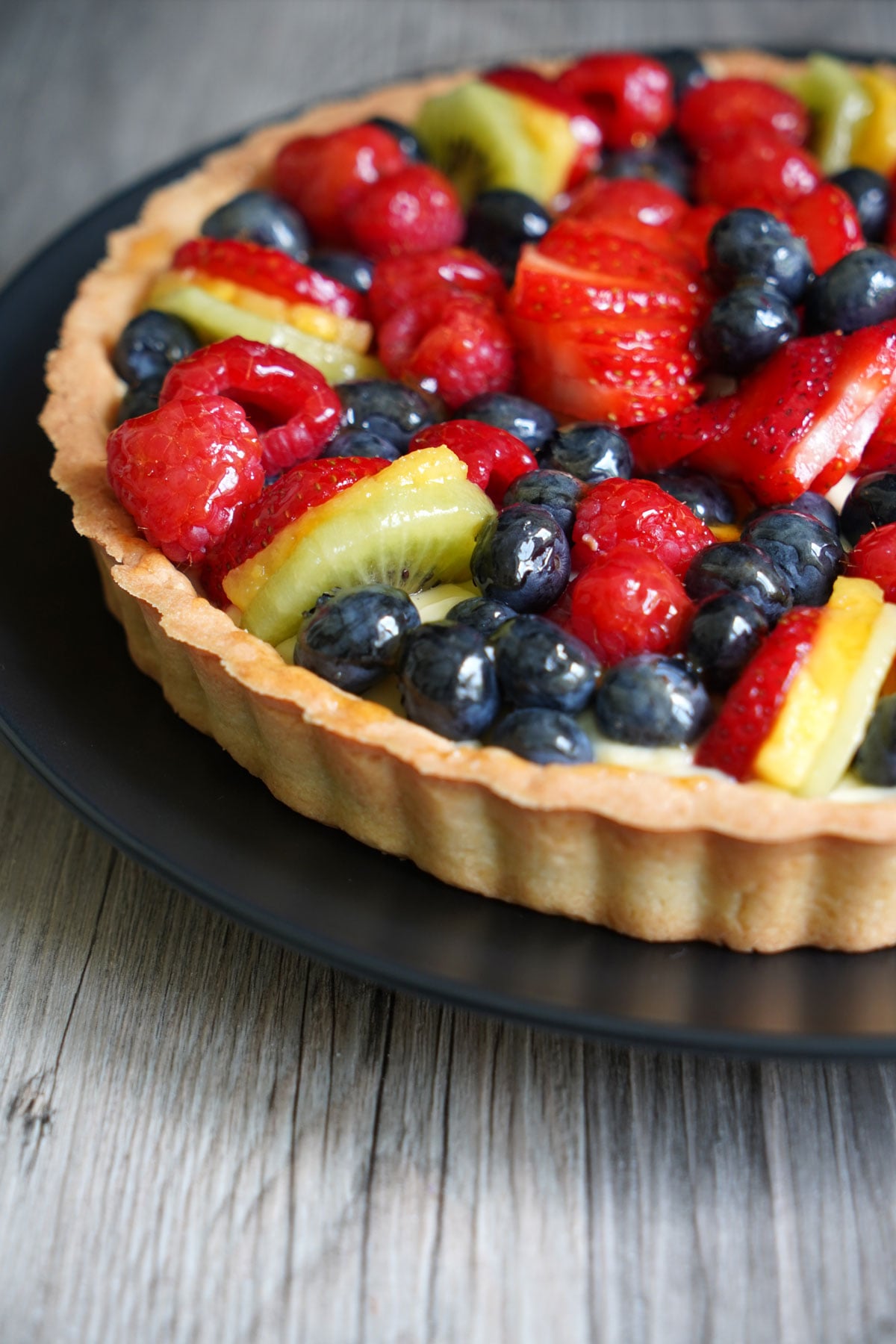
A buttery shortbread crust, silky vanilla pastry cream, and a generous layer of fresh seasonal fruit. This classic French fruit tart is a patisserie-worthy showpiece that is sure to impress anyone.
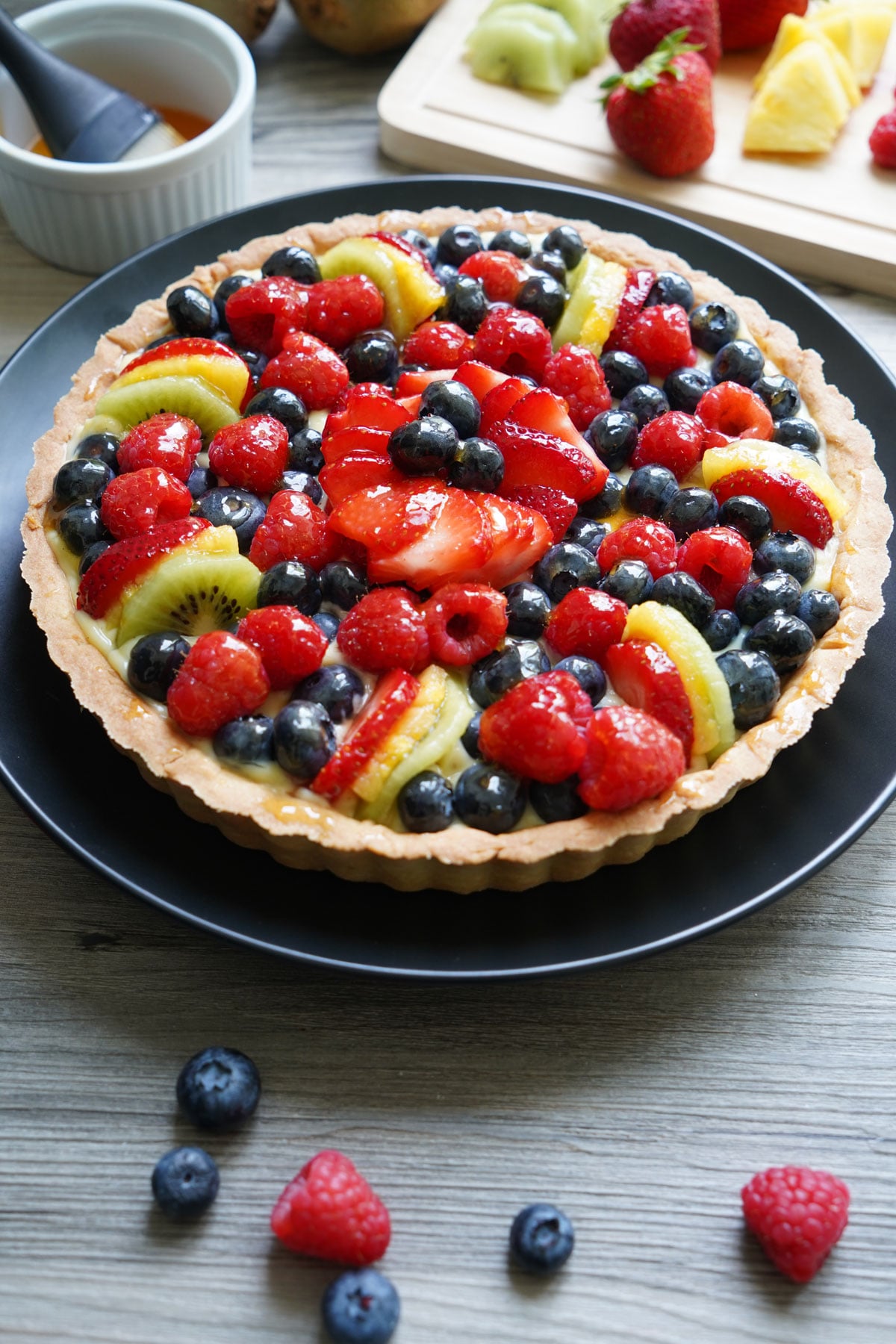
A classic fruit tart is one of the first things I learned in culinary school, and it's easy to see why they're a pastry case staple, both in French patisseries and in grocery store bakeries here at home.
The pâte sucrée or sweet dough crust takes no time at all especially if you use my food processor method for pâte sucrée and the smooth vanilla pastry cream filling comes together faster than you'd think. Topped with a ring of colorful, ripe fruit, this classic French fruit tart (Tarte Aux Fruits) only looks like it took hours.
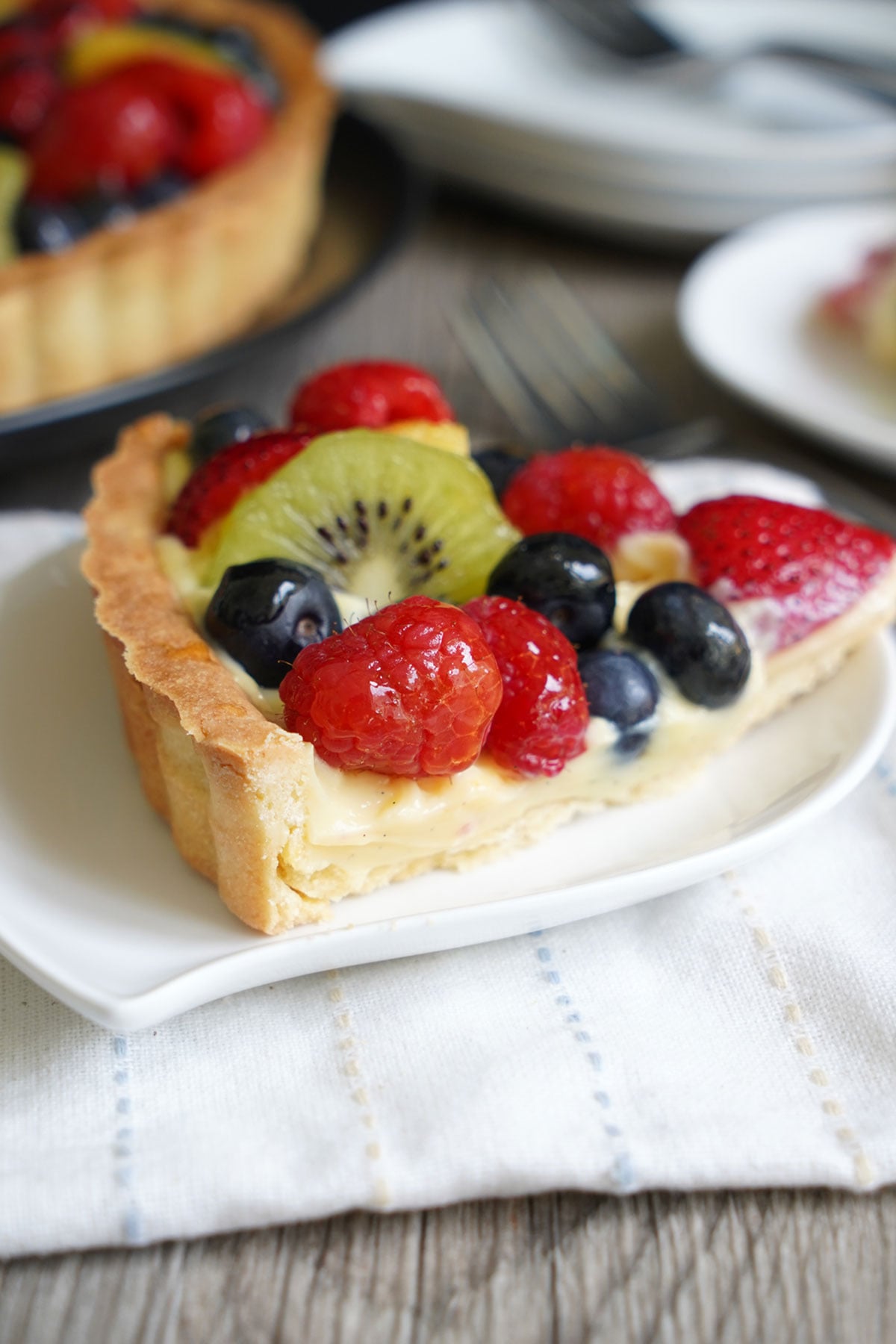
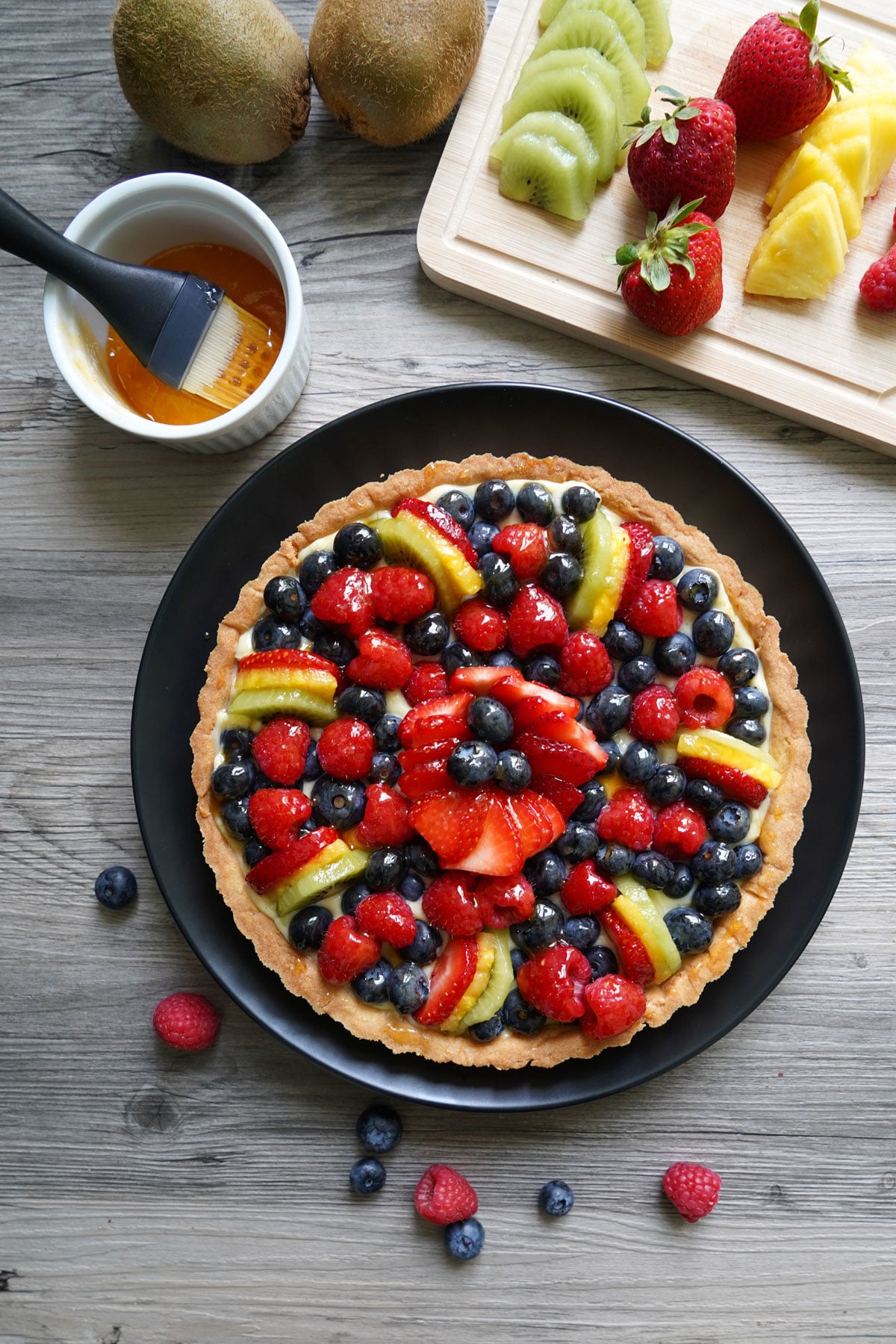
The fruit tart is finished off with a brushing of apricot glaze (nappage). This is what makes the fruit tart look so shiny and also seals it to preserve freshness. For a complete guide on making the glaze, see my post on how to glaze a fruit tart.
Ingredients for Making a French Fruit Tart:
For the crust: confectioners' sugar, cake flour, a pinch of salt, unsalted butter, egg yolks, and water. Cake flour has less gluten than all-purpose, which keeps this crust tender and crisp rather than tough, but all-purpose will work in a pinch if that's what you have on hand.
For the pastry cream: whole milk (2% works too), granulated sugar, egg yolks, cornstarch, and a vanilla bean (vanilla bean paste works as a substitute).
For the topping: fresh fruit of your choice, finished with apricot jam for the glaze. I'm partial to strawberries, blueberries, raspberries, kiwi, and pineapple, but more on choosing and arranging your fruit below.
How to Make a Classic French Fruit Tart
This fruit tart can easily be made in parts over a few days if you are short on time. The dough can be made a week in advance and stored in the refrigerator. The pastry cream can also be made in advance and stored for up to three days in the refrigerator.
Make the Tart Shell (pâte sucrée)
This dough comes together quickly in a food processor. The key is to stop pulsing before it forms a ball - you want large clumps that just hold together. Once shaped into a disc and wrapped, it needs at least an hour in the refrigerator before rolling.
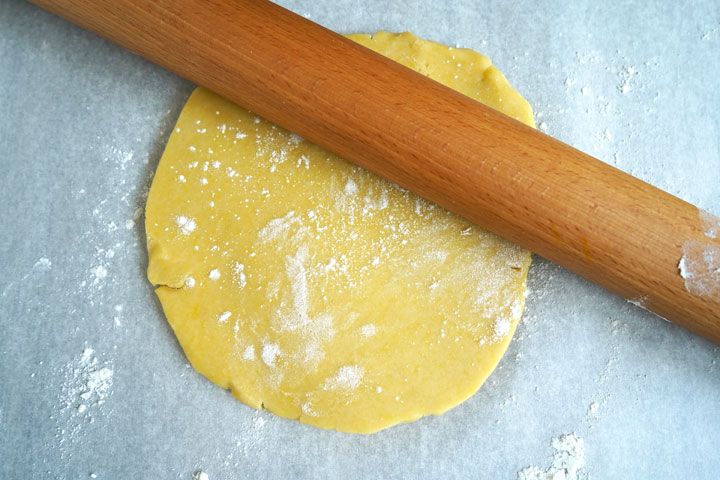
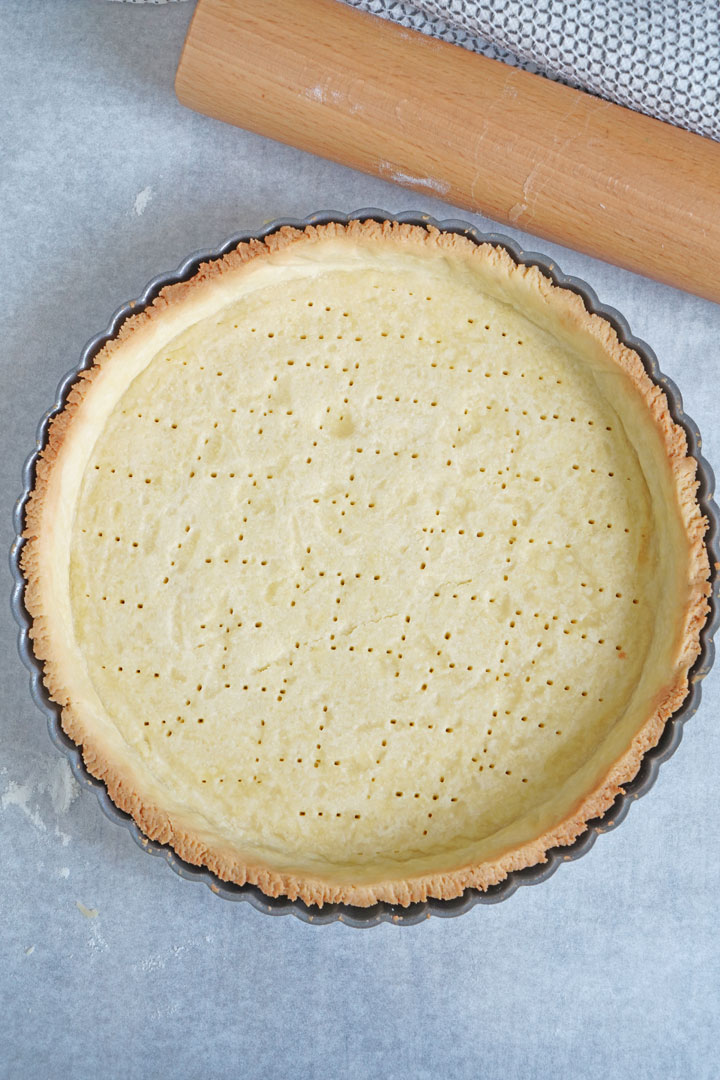
When ready to roll, let the dough sit out for about 20 minutes first. Roll it out at least 2 inches larger than your tart pan. Fold over the rolled dough over your rolling pin and use the pin to gently lift and place the dough over the tart tin. Press it gently against the sides, trim the excess, dock the bottom with a fork, and chill for 20 minutes before blind baking.
Blind Bake the Shell
Blind baking means baking a crust or tart shell without any filling. You can read more about blind baking in my how to blind bake tutorial.
For this recipe, I'll briefly summarize: To blind bake, press aluminum foil or parchment paper against the crust and fold it over the rim to protect the edges, fill with pie weights or dry beans, and bake at 350°F for 15 minutes or until it no longer looks wet.
Remove the weights and foil and bake another 5 to 10 minutes until golden brown. Cool completely before filling.
Make the Pastry Cream
Heat the milk with half the sugar and the vanilla bean seeds over medium-high heat in a large pot until it comes to a boil. Meanwhile, in a large bowl, whisk the egg yolks, remaining sugar, and cornstarch together into a smooth pale mixture.
Once the milk has boiled, very slowly pour it into the egg mixture while whisking constantly. This tempers the egg mixture so the heat doesn't cook the eggs. Then return everything to the pot and heat over medium-high, whisking continuously until the cream thickens and boils. Do not stop whisking! It takes a few minutes.
Let it boil for 2 minutes, then spread it onto plastic wrap, wrap and cover, and refrigerate until ready to use. You can also put it into a shallow bowl and cover the top with plastic wrap.
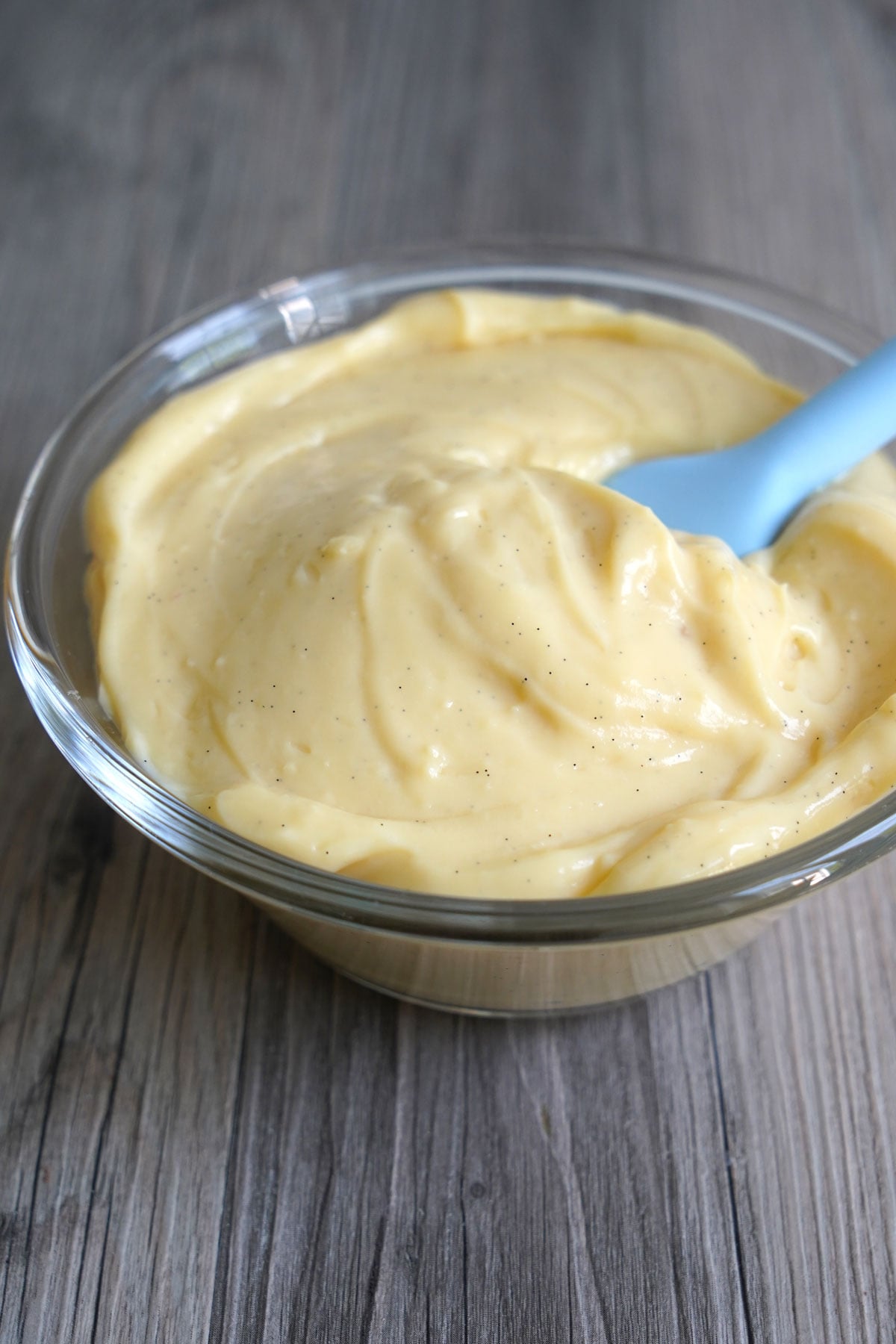
For a more detailed breakdown of the pastry cream method, including troubleshooting tips, head to my How to Make Basic Pastry Cream post. If you really don't want to bother with cooking your own pastry cream, I have a whole post on fillings for fruit tarts where you can choose an easier option.
Assemble the Fruit Tart
Once the tart shell is completely cooled, whisk the pastry cream until smooth and spreadable and fill the shell. If the pastry cream was chilled for several hours, it may seem rubbery but whisking it will relax the cream and make it smooth again.
For an added flavor punch, you can whisk in a small amount of additional flavoring here such as Gran Marnier or even some lemon zest for a refreshing citrus taste.
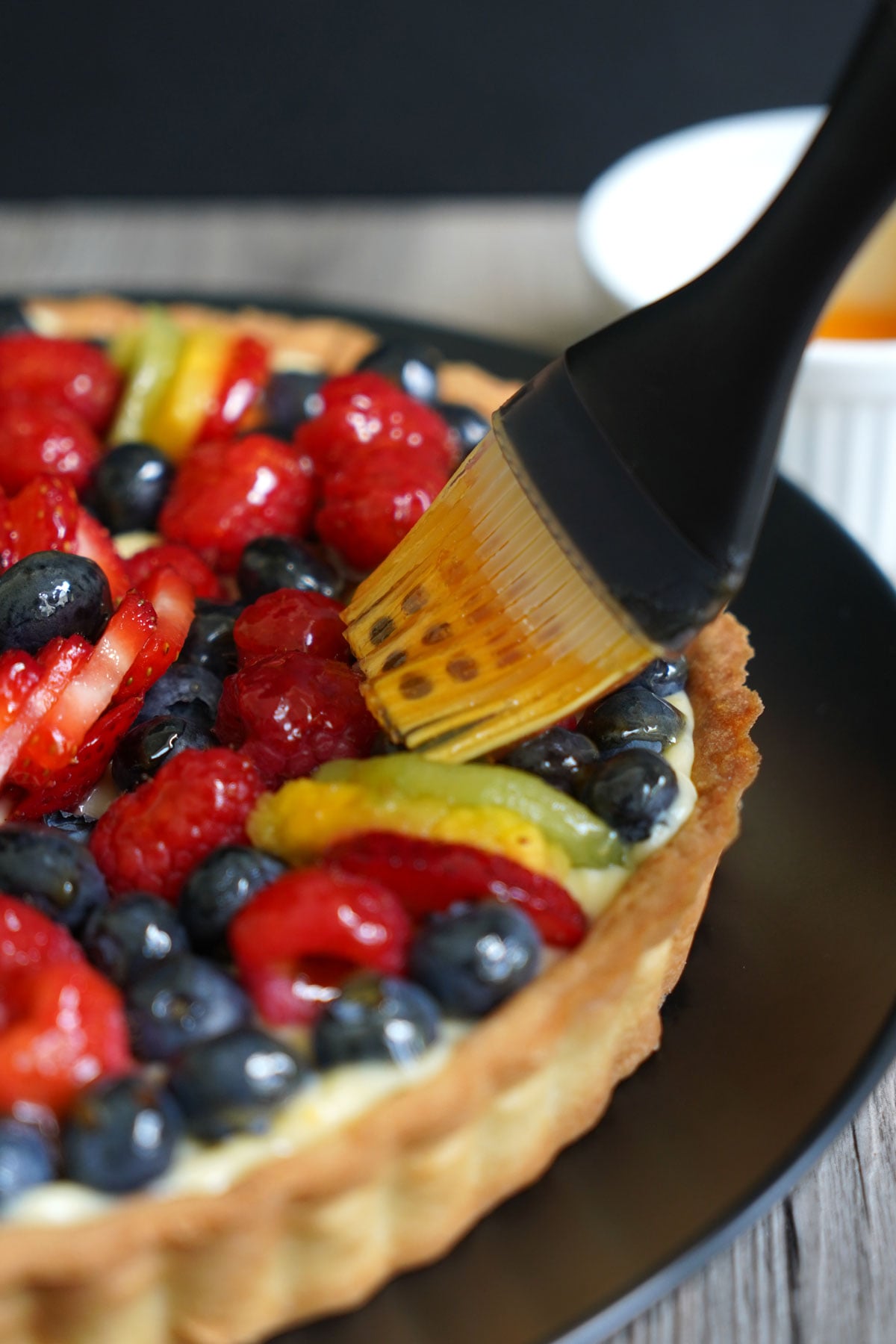
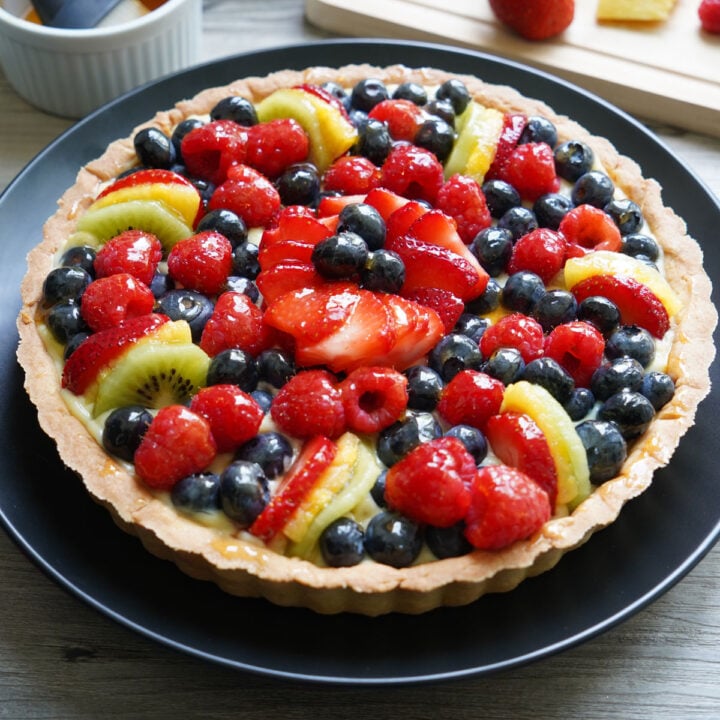
Arrange your fruit in a decorative pattern, covering the pastry cream completely. For the finishing touch, gently apply a fruit tart glaze over the fruits with a pastry brush. This is what gives the tart that signature patisserie shine and helps seal the fruit to preserve freshness.
Choosing and Arranging Fruit
Almost any fruit works on a classic French fruit tart, but some hold up better than others. Fresh berries are the natural choice - strawberries, blueberries, raspberries, and blackberries all stay perky and look beautiful against the pastry cream. Kiwi slices, cut pineapple, and grapes are also great options and add color and variety to the arrangement.
Avoid fruits that brown once cut, like bananas, apples, and pears, as well as high moisture content fruits like melon and orange slices, which will weep into the pastry cream and soften the crust.
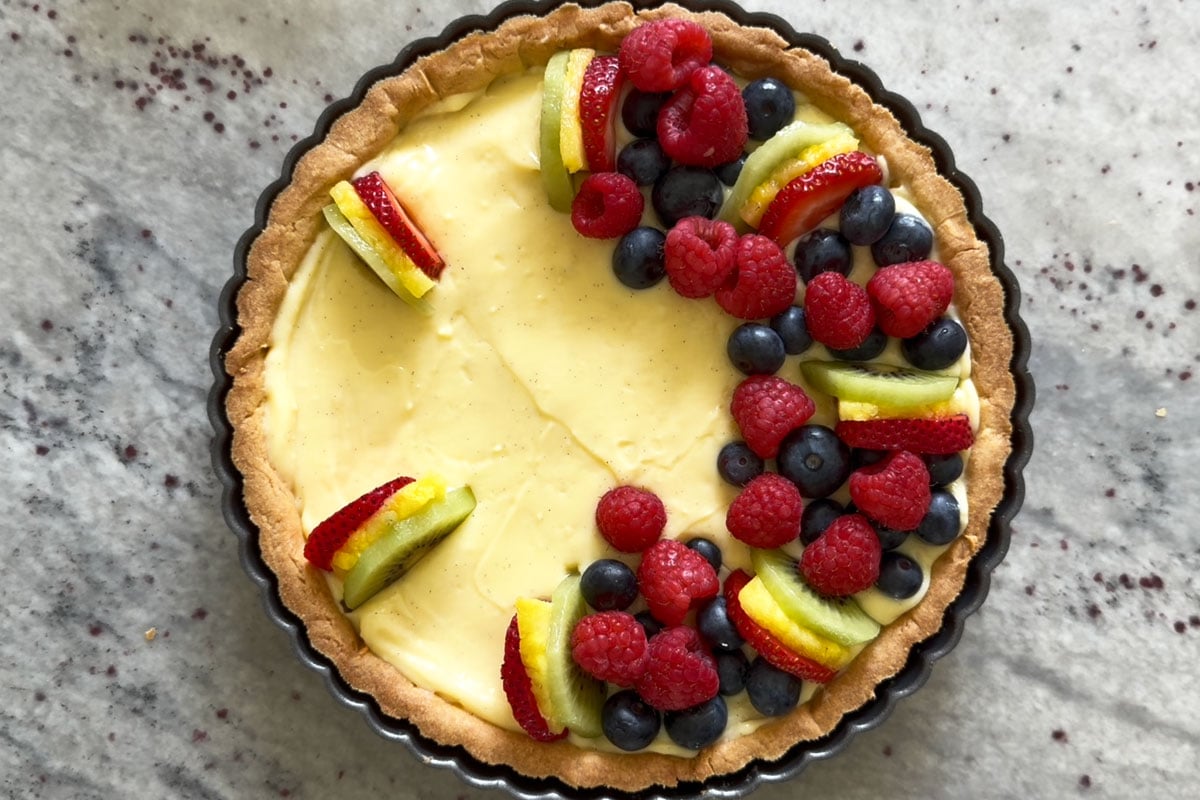
When it comes to arranging, the goal is to cover the pastry cream completely and work in a pattern that feels intentional, whether that's concentric circles, clusters by fruit type, or something more free-form.
Make Ahead and Storing Your Fruit Tart
The tart can be made ahead in parts but should be assembled the day it's served. The raw tart dough can be stored in the refrigerator for up to one week and the pastry cream for up to 3 days so you can easily spread the work over a few days.
Fruit tarts are best eaten the day they are assembled. They can be stored in the refrigerator for 1-2 days and will stay fresh depending on the fruit chosen.
Glazing the tart will definitely preserve it for longer. Freezing is not an option here as the fruits will turn mushy once thawed and the crust will be soggy.
Troubleshooting and Tips
- Though my fruit tart was fine after 1 day in refrigerator, the most common issue with fruit tarts is a soggy crust. There is another French fruit tart version which uses a layer of frangipane (almond cream) between the crust and pastry cream. It bakes right onto the shell, which adds a distinct almond flavor and helps form a barrier so the pastry cream doesn't soften the crust.
- If you don't want to make frangipane, brushing a thin layer of melted white chocolate on the inside of the baked shell and letting it set before filling is a quick alternative.
- If your pastry cream turns out too runny, it's likely that you did not cook it for long enough.
- If the dough cracks while rolling, it likely needs more time at room temperature. Give it another five to ten minutes and try again.
- Finally, don't assemble the tart too far in advance. Once the pastry cream goes into the shell, the clock starts. Assemble as close to serving time as possible for the best result.
Classic French Fruit Tart Recipe
A classic French fruit tart with a crisp, buttery pâte sucrée shell, silky vanilla pastry cream, and fresh seasonal fruit finished with an apricot glaze.
Ingredients
Crust (pâte sucrée)
- 1 ¾ cup cake flour (210g), all-purpose works too)
- ½ cup confectioners' sugar (65g)
- Pinch of salt
- ½ cup unsalted butter, cubed and cold (122g)
- 2 egg yolks
- 1 tablespoon water (15mL)
Pastry cream
- 2 cups whole milk (474mL) (2% also works)
- ⅔ cup granulated sugar (130g)
- 4 egg yolks, whisked
- 4 tablespoons cornstarch (35g)
- 1 vanilla bean (or 1 tablespoon vanilla bean paste)
Topping
- Fresh fruit of your choice (strawberries, blueberries, raspberries, blackberries, kiwi, pineapple, grapes)
- Apricot preserves for the glaze
Instructions
- Make the sweet tart dough (pâte sucrée): In a food processor, combine cake flour (or all-purpose flour), confectioners' sugar, and a pinch of salt and pulse a few times to mix. Add unsalted butter and pulse until the mixture is crumbly with butter pieces roughly the size of peas. Lightly break up 2 egg yolks with a fork and add them a little at a time, pulsing between each addition. Add the water and continue pulsing until the dough comes together in large clumps. Do not over-process into a ball. Turn the dough out onto plastic wrap, shape into a 6-inch disc, wrap, and refrigerate for at least 1 hour. The dough can be refrigerated for up to 1 week or frozen for up to 1 month.
- Make the pastry cream: Lay out an 18-inch piece of plastic wrap on a heatproof surface. In a large pot, stir the milk with about half of the granulated sugar. Slit 1 vanilla bean (or 1 tablespoon vanilla bean paste) lengthwise, scrape the seeds, and stir them into the milk, adding the pod to the pot. Heat over medium-high until it comes to a boil, then remove from heat and discard the pod. Meanwhile, whisk 4 egg yolks with the remaining sugar and cornstarch until smooth and pale. Very slowly pour the hot milk into the egg mixture while whisking constantly — resting your bowl on a damp towel helps keep it steady. Return the entire mixture to the pot and heat over medium-high, whisking continuously until it thickens and comes to a boil. Reduce the heat and let it boil for 2 minutes without stopping stirring. Spread the pastry cream onto the plastic wrap, fold it over to cover, and refrigerate until ready to use.
- Roll and line the tart pan: Let the dough sit at room temperature for about 20 minutes before rolling. If it cracks while rolling, give it more time. Roll it out to at least 2 inches larger than your tart pan. I used a 9 inch tart pan. Transfer to the pan and press gently against the sides. Trim away the excess. Prick the bottom all over with a fork and chill for 20 minutes.
- Blind bake the shell: Preheat the oven to 350°F. Press aluminum foil or parchment paper gently over the crust and against the sides, folding it over the rim to protect the edges from burning. Fill with pie weights, dry beans, or rice and bake for 20 minutes, or until the dough no longer looks raw on top. Remove the weights and foil and bake for another 5 to 10 minutes until the crust is golden brown. Cool completely before filling.
- Assemble the tart: Once the tart shell is completely cooled, whisk the cooled pastry cream until smooth and spreadable. Fill the shell to the top of the crust with the pastry cream and spread it evenly. Arrange fresh fruit of your choice (strawberries, blueberries, raspberries, kiwi, pineapple) in a decorative pattern over the top, covering the pastry cream completely.
- Glaze and serve: Warm ½ cup apricot jam with a splash of water over low heat until melted and smooth. Let it cool slightly and then gently brush the glaze over the fruit. Chill in the refrigerator until ready to serve. Best eaten the day it is assembled.
Notes
- To prevent a soggy crust, spread a thin layer of frangipane on the blind-baked shell and bake until set before adding the pastry cream. Alternatively, brush the inside of the baked shell with melted white chocolate and let it set before filling.
- The raw dough can be refrigerated for up to 1 week and the pastry cream for up to 3 days, making this an ideal make-ahead dessert assembled the day of serving.
- Avoid fruits that brown when cut (bananas, apples, pears) or high-moisture fruits (melon, orange slices) as these will soften the crust.
Comments
No Comments