

This four ingredient salted caramel sauce takes just 10 minutes to make. Elevate your ice cream, sliced apples, cakes, cupcakes and more to the next level.
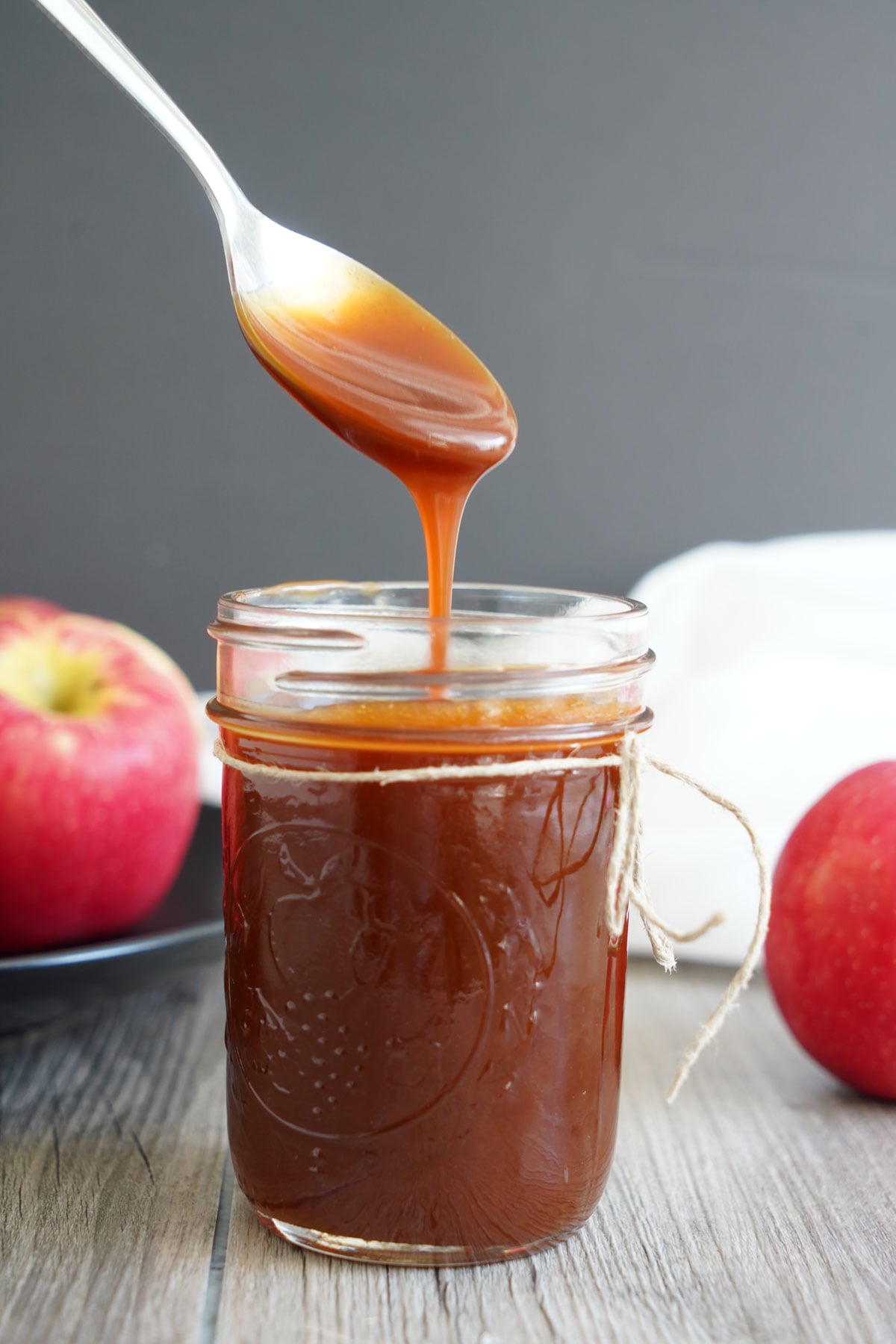
This salted caramel sauce recipe is a must add to your dessert sauce repertoire. You can use caramel sauce the same way you use other sauces such as chocolate sauce and raspberry sauce. Plate beautiful desserts, drizzle it over a slice of apple spice cake, or use it as a topping on almost anything!
Why This Recipe Works
As a trained pastry chef, I've made caramel more times than I can count, and the most common failures I see are grainy sauce and burnt sugar. This recipe avoids both by using a wet caramel method.
Adding a small amount of water to the sugar slows the cooking just enough to prevent crystallization, which is what causes that gritty texture. It takes a minute or two longer than a dry caramel, but the result is a smooth sauce every time.
You also don't need a candy thermometer. The color of the caramel tells you everything, and I'll show you exactly what deep amber looks like in the photos below so you know when to pull it off the heat.
Best of all, it's just four ingredients: sugar, butter, cream, and sea salt. Ten minutes on the stove and you'll never buy the jarred stuff again.
Ingredient Notes
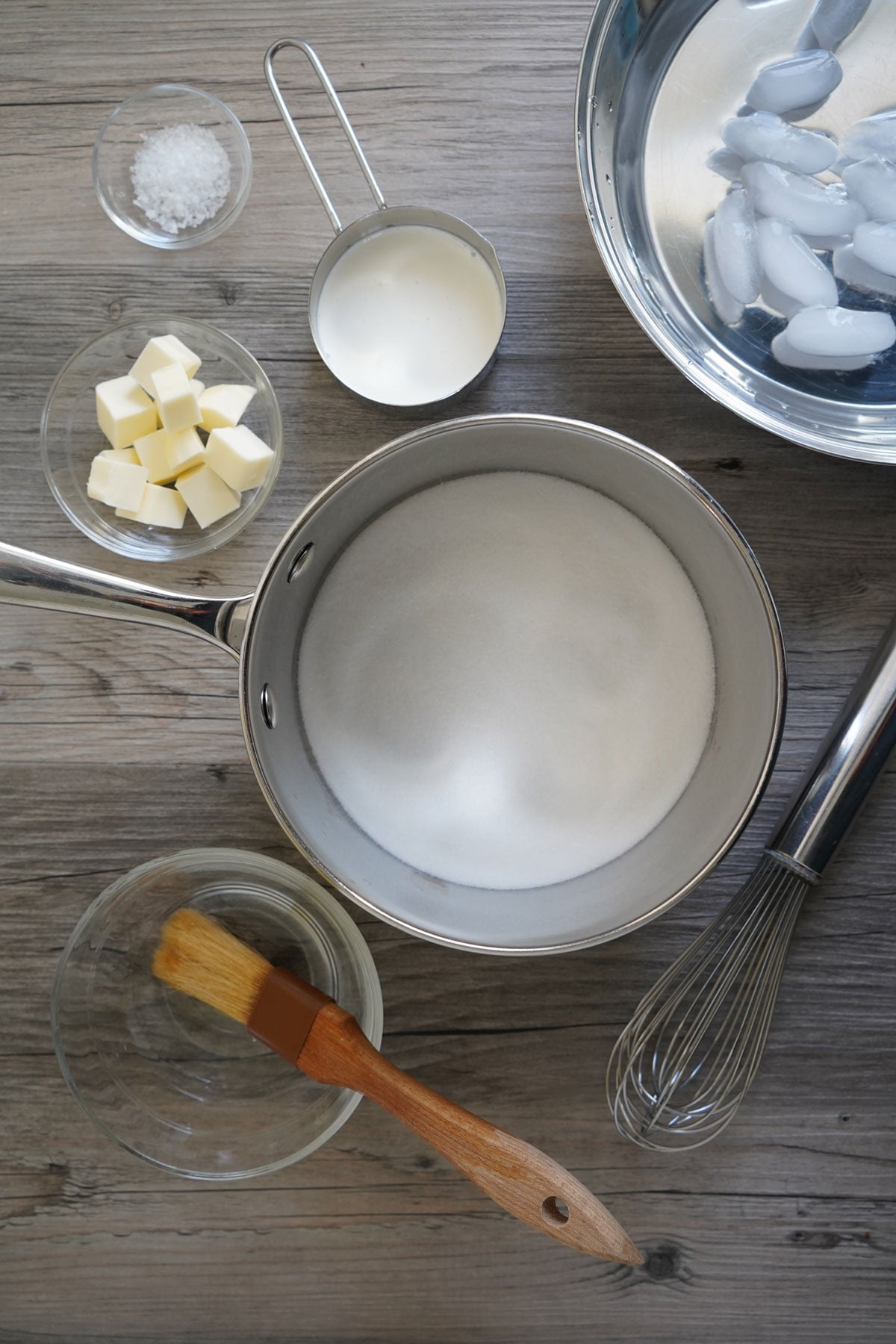
- Granulated sugar: Plain white granulated is what you want. Avoid brown sugar or raw sugars here, which muddy the color you're watching for.
- Unsalted butter: Use unsalted so you control the amount of salt in the finished sauce.
- Heavy cream: Full-fat is essential for a smooth, pourable sauce. Outside the US, reach for double cream.
- Sea salt: Flaky sea salt is best. Its texture and clean flavor beat table salt, which can taste sharp.
How To Make Salted Caramel Sauce
I can't emphasize enough how important it is to have everything in place before you begin making this sauce. Caramel comes together very quickly and can go from cooked to burnt in a matter of seconds. You want your ingredients and tools ready and by your side before you begin.
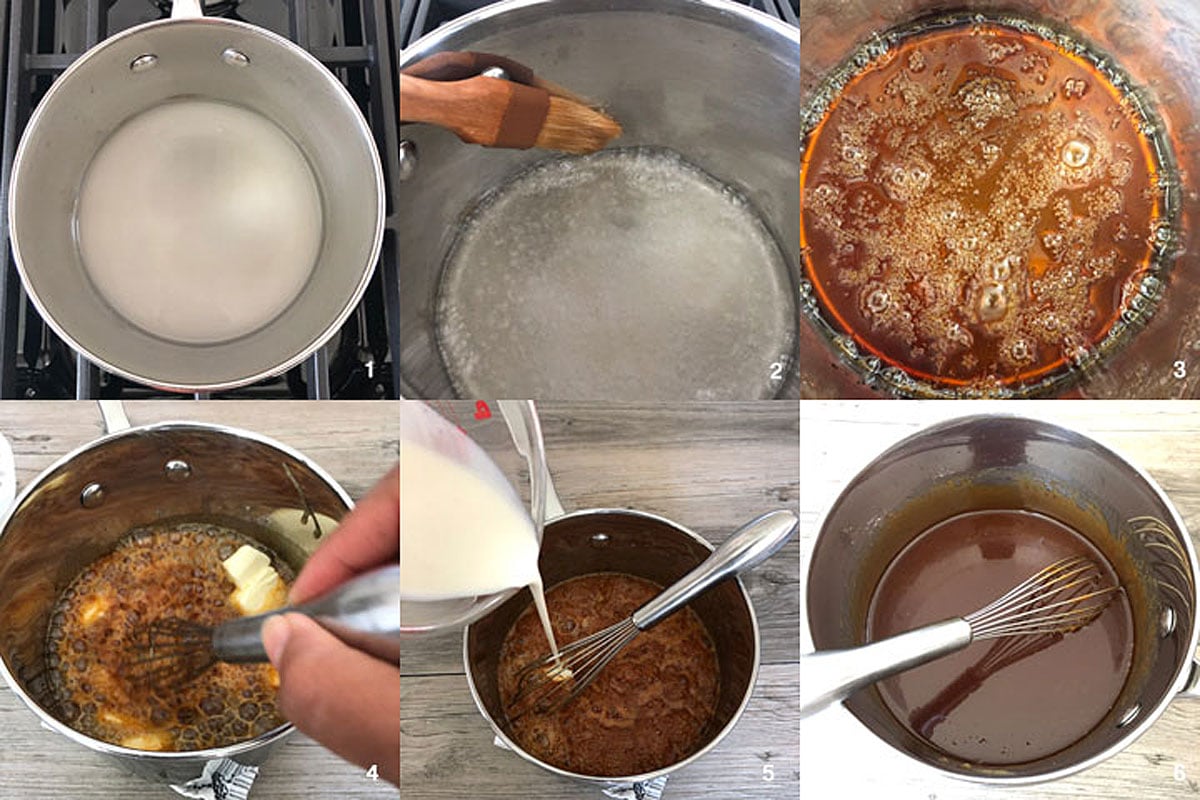
Begin by caramelizing the sugar over the stove with a small amount of water. This method requires almost no stirring.
Just keep the sides of the pot clean of any sugar crystals by brushing them down with a wet pastry brush. Sugar crystals left on the side can trigger crystallization and lead to a grainy sauce.
Watch the color of the caramel. You want it to be a deep amber but not burnt. It's a fine line between the two, but after you've done it a few times you'll get the hang of it. It's also better to stop the cooking earlier than later.
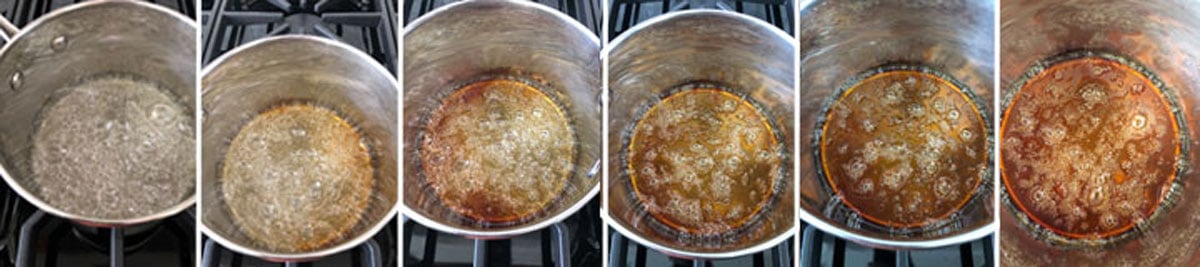
Caramel will continue to cook in a hot pot even after removing it from the stove. That's another reason to have your butter and cream ready to cool things down quickly. I keep an ice bath next to the stove too; more on that in the tips below.
Once the sugar has reached that deep amber color, add the butter all at once and whisk until melted. Then slowly pour in the cream and whisk quickly.
The mixture will bubble up when you add these ingredients because of the temperature difference, but it will quickly settle down. Use a larger pot than you think you need so it doesn't overflow.
Once the butter and cream are incorporated, stir in the salt and let it cool slightly. That's it.
Pastry Chef Tips for Perfect Caramel
To cool caramel sauce quickly, use an ice bath. Fill a bowl large enough to hold the base of your pot with ice water and keep it next to the stove before you start. The moment the caramel reaches deep amber, dip the bottom of the pot into the ice bath for a second or two.
This stops the residual heat from carrying the caramel past amber into burnt, which is the difference between a rich sauce and a bitter one. It's a small step that takes all the anxiety out of the color stage.
Use a light-colored, stainless steel pot. A dark or nonstick pot hides the color of the caramelizing sugar, and color is the only thing you have to judge doneness. A stainless pot lets you read the amber accurately.
Stop a shade earlier than you think. Caramel keeps cooking after it leaves the heat. If you pull it right when it looks perfect, carryover heat will push it too far. Aim for a hair under.
Troubleshooting Salted Caramel Sauce
Caramel has a reputation for being temperamental, but almost every problem comes down to one of a few things. Here's how to fix them, and how the wet method prevents most of them in the first place.
My caramel turned grainy or crystallized. This is the most common issue, and it happens when sugar crystals form on the side of the pot and fall back into the caramel, setting off a chain reaction.
The wet method already reduces the risk, but the two techniques that matter most are keeping the sides of the pot brushed down with a wet pastry brush and resisting the urge to stir. If it does crystallize, add a splash of water and gently reheat, swirling rather than stirring, until the crystals dissolve.
My caramel seized when I added the cream. A little bubbling and sputtering is normal and expected. Seizing into a hard clump usually means the cream was too cold or went in too fast.
Room-temperature cream added in a slow, steady stream keeps this from happening. If it does seize, keep the pan on low heat and whisk. The clumps will almost always melt back in.
My caramel tastes bitter or burnt. Caramel goes from deep amber to burnt in seconds, and it keeps cooking off the heat from the residual warmth of the pot. Pull it a shade earlier than you think you should, and have your butter and cream ready to stop the cooking the moment the color is right. If it has already tipped into bitter, there's no saving it. Start over.
My sauce is too thick. Caramel thickens as it cools and thickens further in the fridge. Warm it gently and it will loosen right back up. If you want it pourable at room temperature, whisk in a tablespoon of warm cream at a time until it reaches the consistency you want.
My sauce is too thin. A thin sauce usually just needs a little more time on the heat before the butter and cream go in, since a paler caramel holds less structure. It will also thicken considerably once chilled, so judge the final consistency cold, not hot.
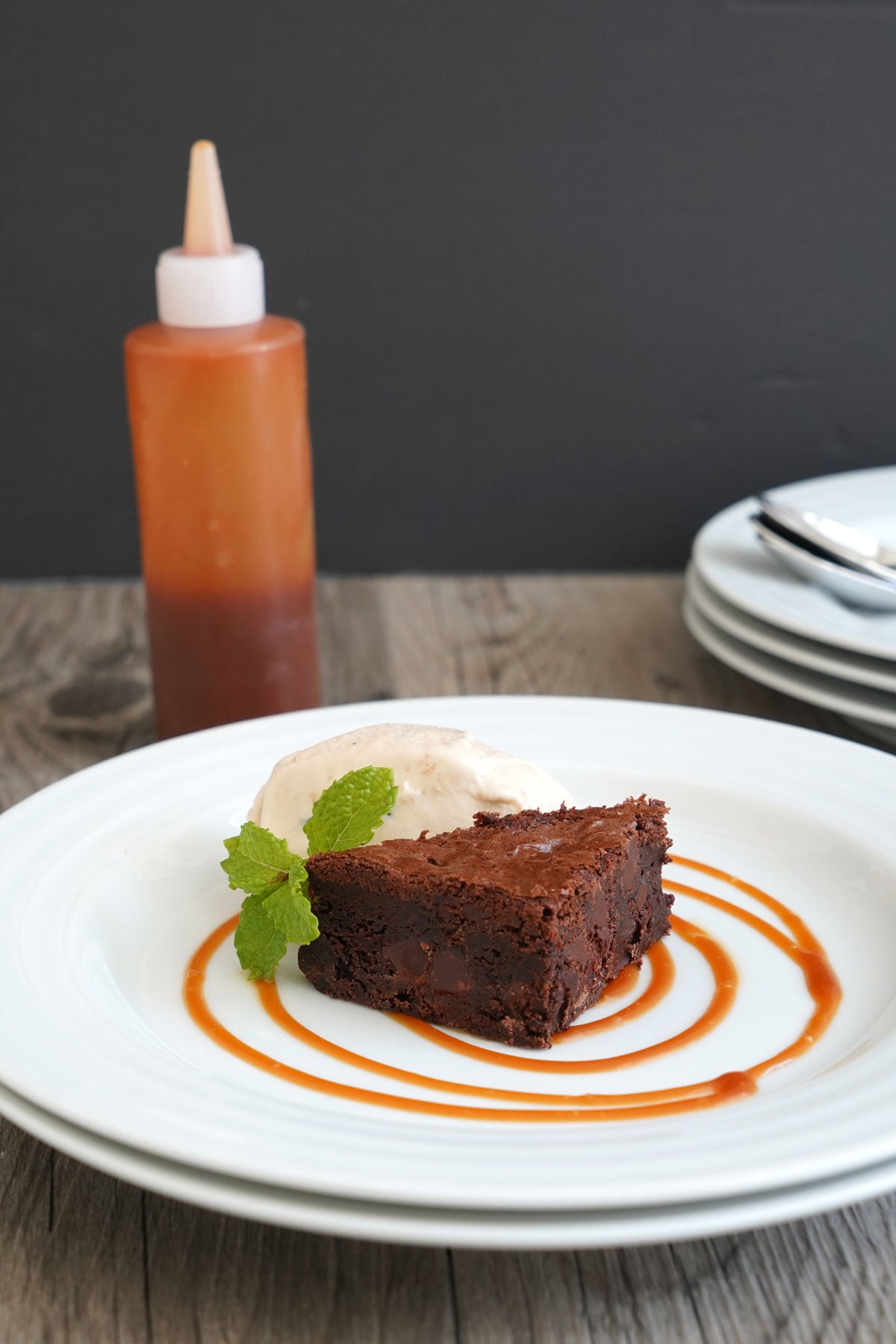
Storing Caramel in a Squeeze Bottle
A squeeze bottle is my favorite way to store caramel sauce, especially if you like to drizzle it over ice cream, plated desserts, or a stack of pancakes. The narrow tip gives you far more control than a spoon, and there's no jar to dip into.
Let the sauce cool until it's warm but still pourable, then transfer it to the bottle using a funnel or a steady hand. Store it in the refrigerator the same way you would a jar, for up to two weeks.
When you're ready to use it, the caramel will have firmed up in the cold. Stand the closed bottle in a bowl or mug of hot water for a few minutes until the sauce softens and flows freely again.
Give it a gentle shake, and it's ready to drizzle. Avoid microwaving a plastic bottle. The hot water bath is gentler and keeps the caramel from overheating in spots.
Salted Caramel Sauce FAQ
What is salted caramel sauce made of? Salted caramel sauce is made from just four ingredients: granulated sugar, butter, heavy cream, and salt. The sugar is caramelized until deep amber, then butter and cream are whisked in to make it smooth and pourable, and salt is added at the end for that sweet and salty balance.
How long does salted caramel sauce last? Stored in a sealed jar in the refrigerator, salted caramel sauce keeps for up to two weeks. It will thicken as it chills, so warm it gently before using.
How do you reheat caramel sauce? For caramel stored in a jar, microwave it in 10 second bursts, stirring between each one, until it's warm and pourable. For caramel in a squeeze bottle, stand the closed bottle in a bowl of hot water for a few minutes and give it a shake. Both methods loosen the sauce gently without overheating it.
Can I double this recipe? I don't recommend doubling caramel in a single pot. A larger volume of sugar caramelizes unevenly and is much harder to read for color, which is exactly when caramel goes from perfect to burnt. If you need more, make two separate batches instead.
What's the difference between salted caramel and regular caramel? The only difference is the salt. Salted caramel has flaky sea salt stirred in at the end, which cuts the sweetness and deepens the flavor. Leave it out, or use a small pinch of table salt in its place, and you have a plain caramel sauce.
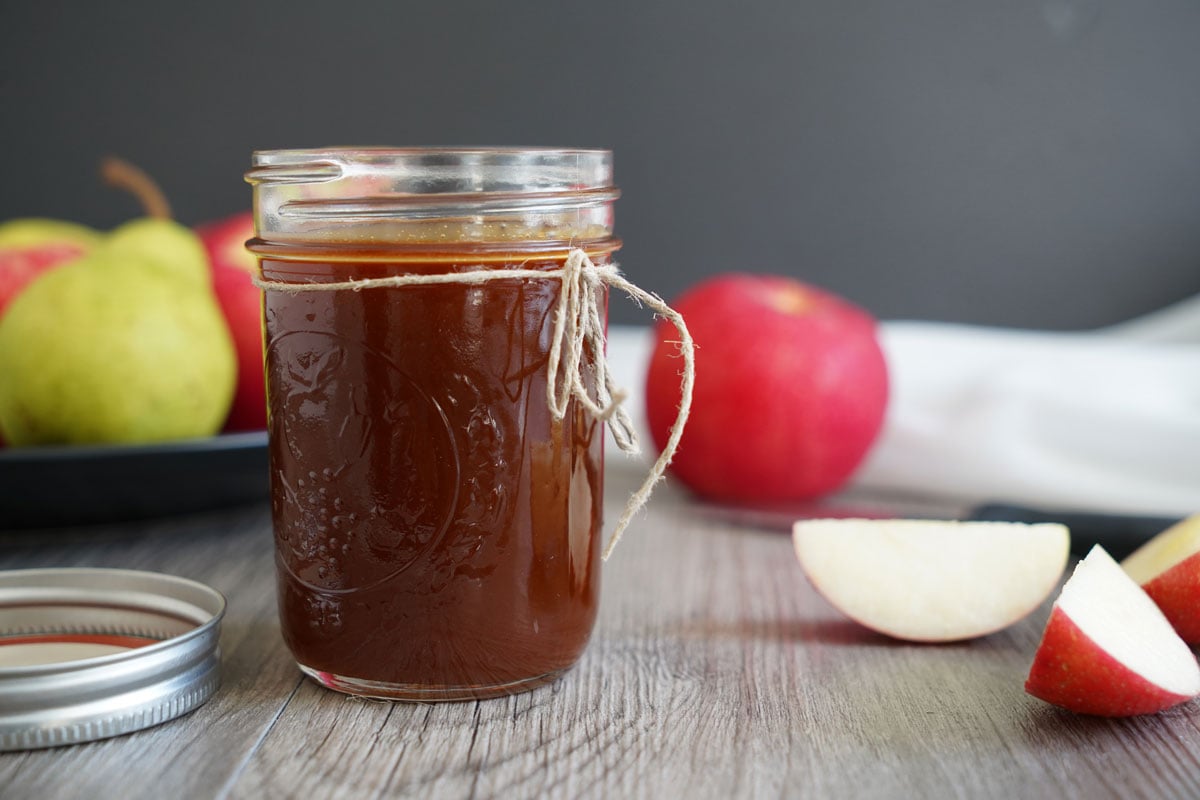
What Can I Use Salted Caramel Sauce On?
Pretty much anything! Here are some ideas.
- Ice cream like this espresso chocolate chip ice cream!
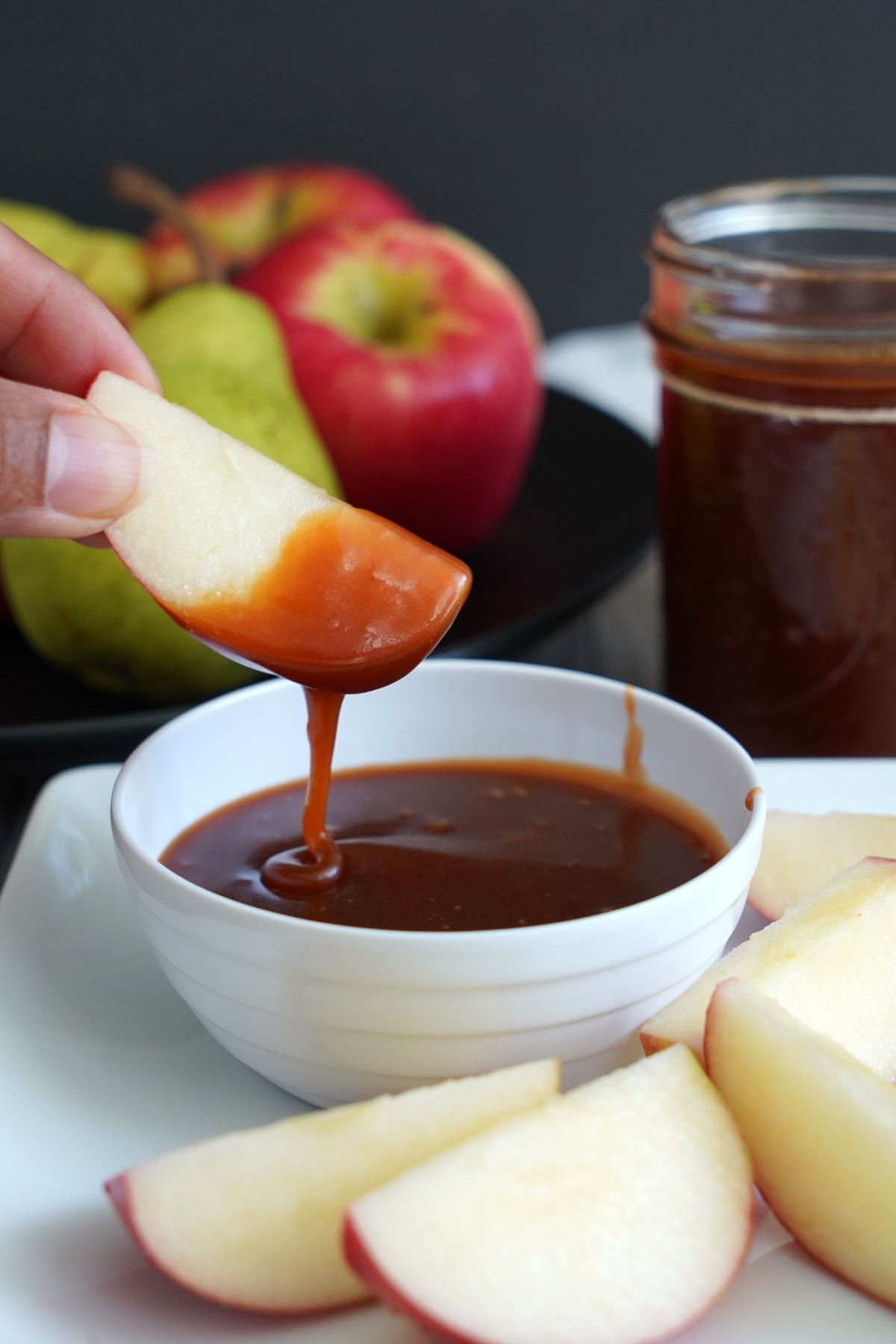
- Apple slices dip
- Dripped on the side or drizzled on top of a cake, like this Mexican chocolate cake
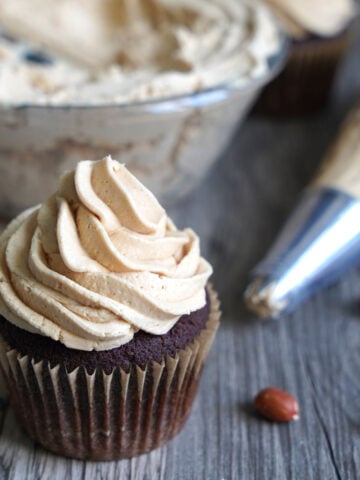
- Over cupcakes topped with buttercream, like this salted caramel buttercream
- Cheesecake topping, like on these mini pumpkin cheesecakes
- Cinnamon rolls topping
- Drizzled over brownies or apple pie bars
- Drop some into your coffee!
- Churros dip
- Plating desserts
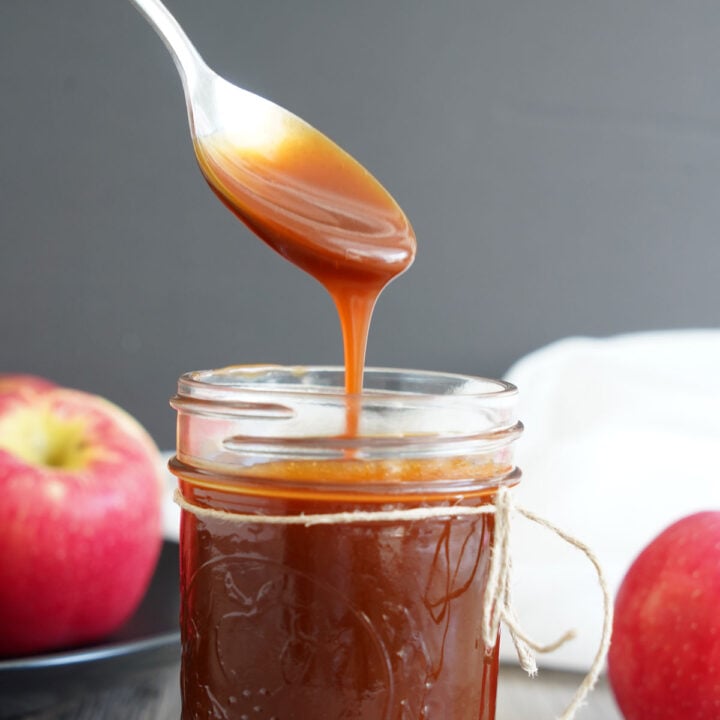
Salted Caramel Sauce Recipe
This four ingredient salted caramel sauce takes just 10 minutes to make. Elevate your ice cream, sliced apples, cakes, cupcakes and more to the next level.
Ingredients
- 1 cup granulated sugar (200g)
- 6 Tablespoons unsalted butter, cubed (85g)
- ½ cup heavy cream (118mL)
- ½ Tablespoon flaky sea salt
Instructions
- To work quickly, prepare by measuring out all of your ingredients first and having them by your side, along with a whisk and an optional pastry brush and small cup of water.
- Add the sugar to a medium sized sauce pan. Make sure the sugar is evenly covering the bottom of the pan. Add ¼ cup of water and make sure all the sugar is wet.
- Heat the sugar-water over medium high heat. As it heats, dip your pastry brush in the cup of water and brush around the sides of the pot above where the sugar-water is melting. Only do this to keep the sides clean. This is to wipe down any stray sugar molecules that have found their way to the side of the pot.
- Swirl the pan occasionally only if you need to as the sugar cooks and caramelizes. It will turn from a clear color to a deep amber color.
- Remove the pan from the heat and immediately add the butter all at once and whisk until melted. The mixture may bubble up when the butter is added.
- Slowly pour the cream into the caramel, being careful while the mixture bubbles up.
- Whisk the cream until the sauce is smooth. Add the salt and mix well.
- Transfer the sauce to a glass jar and let it cool before using or capping and storing in the refrigerator.
Notes
The amount of salt you want to add depends on your taste. ½ Tablespoon of sea salt is the maximum that I would add. If you prefer it to be a little less salty, I would start with half the amount and adjust it accordingly. As long as you adjust the salt before it completely cools, it should be easy to incorporate.
Nutrition Information:
Yield: 20 Serving Size: 1 TablespoonAmount Per Serving: Calories: 102Total Fat: 6gSaturated Fat: 4gUnsaturated Fat: 2gCholesterol: 16mgSodium: 140mgCarbohydrates: 13gSugar: 13gProtein: 0g
This nutrition information is only an approximate provided for convenience and as a courtesy only. Information comes from Nutritionix, an automated nutrition calculator.



Leave a Reply